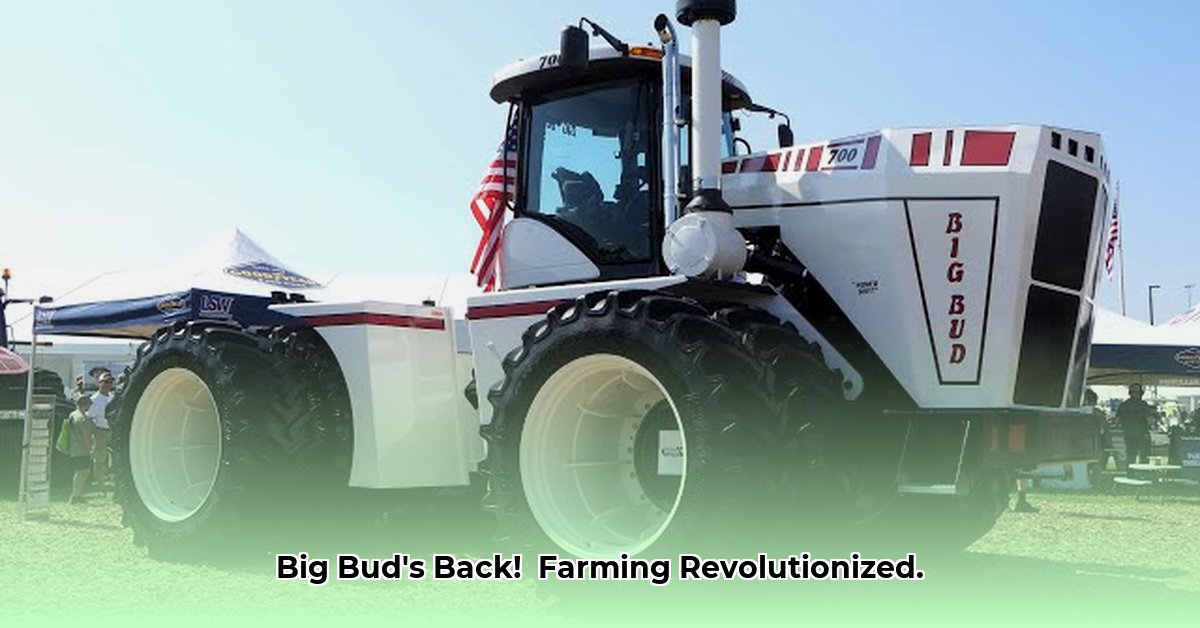
The agricultural world is abuzz with the arrival of the new Big Bud 640 and 700 tractors, marking a significant departure from traditional farm equipment design. These aren't just larger, more powerful machines; they represent a fundamental shift towards repairability and sustainability, empowering farmers and challenging the established industry norms. This focus on ease of repair promises to lower costs, increase uptime, and ultimately, promote a more environmentally friendly approach to modern farming. For more on American-made tractors, check out this resource.
A New Era of Farmer Autonomy
For decades, farmers have faced the frustrating realities of planned obsolescence and excessively expensive repairs. The "right-to-repair" movement has gained significant traction, advocating for farmers' ability to maintain their own equipment. The Big Bud 640 and 700 tractors are a powerful embodiment of this movement, offering farmers increased independence and control over their essential machinery. This translates to less reliance on dealerships and specialized mechanics, resulting in significant cost savings and reduced downtime.
Under the Hood: Simple Design, Accessible Parts
The secret to the Big Bud tractors' remarkable repairability lies in a cleverly designed modular system. Instead of intricately interwoven components, readily accessible parts are a priority. This streamlined approach, reminiscent of building with LEGOs, allows farmers to easily disassemble, diagnose, and resolve issues, minimizing downtime and costly repair bills. Furthermore, the strategic incorporation of readily available Caterpillar parts further streamlines the repair process, reducing the need for specialized parts and potentially shortening wait times. While precise horsepower figures are still being finalized (initial reports mention a range from 640 to 750 hp), the emphasis on functionality and maintainability remains paramount. Isn't this a welcome change in an industry often criticized for its complexity and difficulty in repairing equipment?
Long-Term Benefits: Environmental and Economic Sustainability
The implications of this design extend far beyond mere convenience. By dramatically increasing tractor lifespan through ease of repair, Big Bud significantly reduces waste and environmental impact. Fewer tractors destined for scrapyards translate to a considerable decrease in environmental burden. Economically, the benefits are equally compelling. Reduced repair costs, increased operational uptime, and a lower overall cost of ownership contribute to enhanced profitability and sustainability, particularly for smaller farming operations. The long-term cost savings could profoundly impact the economic viability of farming.
Stakeholder Perspectives: A Multifaceted Impact
The impact of the Big Bud 700 extends beyond the individual farmer. Let's consider the varied perspectives:
Farmers: "The ability to fix minor issues myself is invaluable," says Sarah Miller, a farmer from Iowa. "It means less downtime and more control over my operation." This increased autonomy allows for a greater focus on yields and overall farm productivity.
Independent Mechanics: "The use of standard Caterpillar parts is a boon for us," notes John Smith, an independent mechanic from Nebraska. "It opens up opportunities for more routine maintenance and strengthens the farmer-mechanic relationship." This increases the involvement of local expertise.
Big Bud/Rome Plow Co.: The company's strategic shift towards repairability represents a bold move towards building long-term customer relationships based on trust and mutual benefit. This commitment to repairability builds customer loyalty.
Competitors: The Big Bud's success is forcing competitors to rethink their approach to design and maintenance. The focus on repairability is undeniably setting a new standard in agricultural machinery manufacturing.
Actionable Steps: Practical Advice for Farmers and Mechanics
For Farmers:
- Comprehensive Research: Thoroughly research Big Bud tractors and compare their TCO (Total Cost of Ownership) to competitors.
- Financial Planning: Develop a detailed financial model, incorporating projected repair costs and potential savings. An understanding of the long-term cost-benefit analysis is important.
- Local Mechanic Network: Identify reliable local mechanics familiar with Caterpillar parts.
For Independent Mechanics:
- Specialized Training: Invest in training on Big Bud tractor repair and familiarize yourself with Caterpillar components.
- Establish Relationships: Network with local farmers to establish yourself as a reliable service provider for this new equipment.
- Parts Procurement: Anticipate the increased demand for parts and establish relationships with Caterpillar dealers.
Navigating the Challenges: Potential Hurdles and Opportunities
While the advantages are clear, potential challenges exist. Supply chain disruptions could impact the availability of Caterpillar parts. The higher initial purchase price might seem daunting, but the long-term savings from reduced repair costs need to be factored into the cost-benefit analysis. The ongoing success of the Big Bud 700 will depend upon factors such as consumer demand, the availability of parts, and the industry-wide adoption of repairable designs.
The Future of Farming: A Sustainable Revolution
The Big Bud 700 is more than just a new tractor; it represents a shift towards a more sustainable and equitable agricultural future. It’s a testament to putting farmer needs first and creating machinery designed for longevity and ease of maintenance. The ripple effects of this design philosophy are certain to reshape the entire agricultural equipment industry and its approach to creating tools that serve their users better.